
IPSDMH Publications
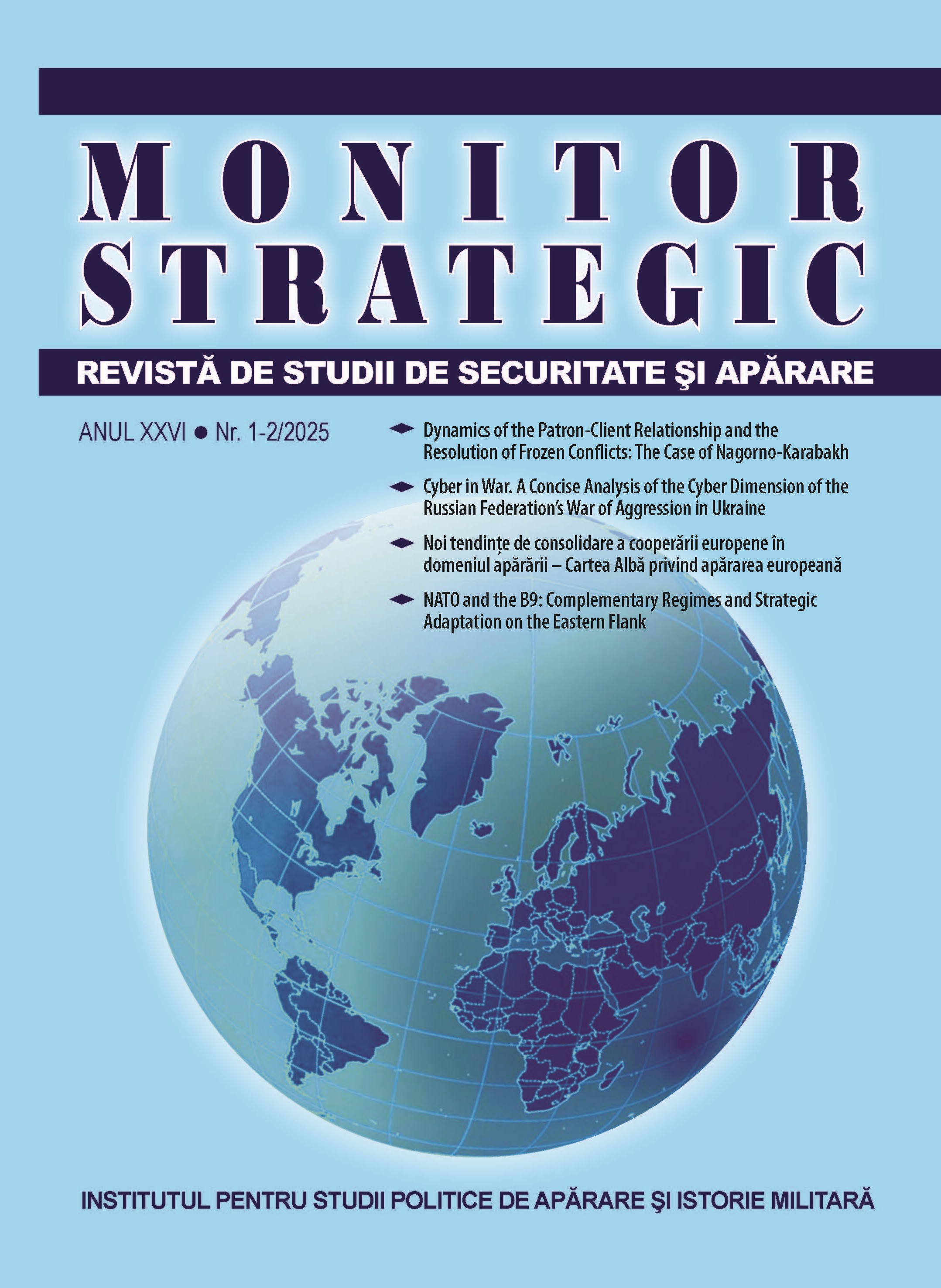 |
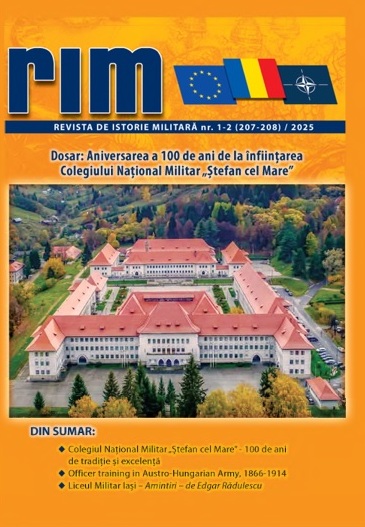 |
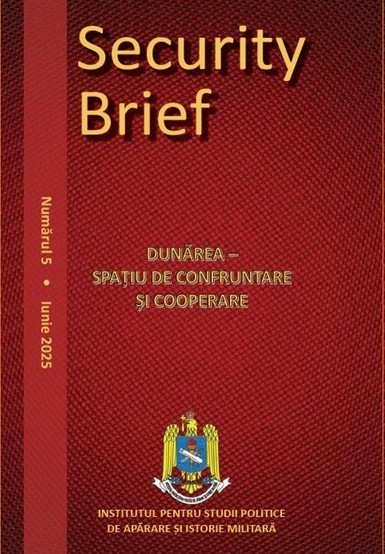 |
| Strategic Monitor Strategic Monitor has been published twice a year since 2000. |
Review of Military HistoryReview of Military History has been published since 1984, and, in a new series since 1990, three times per year.
|
Security Brief Security Brief has been published twice a year since 2023. |
GENERAL EDITORIAL GUIDELINES FOR AUTHORS
STRUCTURE OF ARTICLES
Articles submitted for publication in the journals managed by the IPSDMH editorial team must be written in Romanian or English. Translation into English (text + footnotes/endnotes) is the author’s responsibility.
The IPSDMH editorial team recommends the use of a uniform style of citation and bibliographical drafting, compatible with international standards in the social sciences and humanities. Authors may use established styles, such as Chicago, APA or other academic systems appropriate to the specific nature of the contribution, provided that the same style is applied consistently throughout the manuscript.
The final bibliography shall be arranged alphabetically by the author’s surname. Where there are several works by the same author, they shall be arranged chronologically. Where several works by the same author were published in the same year, distinguishing letters may be used: 2024a, 2024b, etc.
Articles submitted for publication in the journals managed by the IPSDMH editorial team must be written in Romanian or English. Translation into English (text + footnotes/endnotes) is the author’s responsibility.
|
All articles must comply with the following formatting rules:
· The text of the article shall be in Word format, Times New Roman font, 12 pt, justified, 1.5 line spacing.
· The summary of the paper (abstract) should be approximately 200 words (1,500-2,000 characters, including spaces). · The body of the paper must contain between 30,000 and 40,000 characters, including spaces and the related critical apparatus, with references to the authors studied and cited in the paper. · Emails must be named as follows: (Title and journal issue number) (title of the paper) (author’s name). · Page settings: 2 cm margins, A4 format. · Tables, figures, charts and images shall be numbered in the order in which they appear in the text. To ensure their optimal publication, they shall also be sent to the editorial team separately, together with the article, in .jpeg / .png / .tiff format. · In the case of materials written in English, it should be noted that the writing rules accepted for IPSDMH publications are those of British English. For materials written in Romanian, only articles written with Romanian diacritics are accepted. |
| Manuscripts shall have the following structure: · Title (centred, in capitals, bold, font size 24). Excessively general, metaphorical or journalistic titles should be avoided. As far as possible, the title should indicate the topic, period, area, case analysed or central research problem. · A concise presentation of the author/authors, including the following elements, as applicable: military rank, teaching/research title, academic title, forename, surname, position held at the main institutional affiliation; in the case of doctoral candidates – the field of research and the university; city, country of residence, email/contact details. · A relevant abstract of approximately 200 words (italics), written in English. The abstract must present the object of the research, the question or problem addressed, the methodology used, the main ideas and the relevant conclusions. The inclusion of quotations, bibliographical references or general formulations without informative content is not recommended. · 6-8 keywords (italics). These must reflect the central concepts, geographical area, period and field of research. · Introduction/Preliminary considerations (not numbered). This must specify the topic, the relevance of the research, the scientific context, objectives, research question, methodology, sources used, limits of the analysis and structure of the article. The introduction must guide the reader as to the direction of the argument and indicate the author’s contribution. · Body of the paper: two to four chapters, possibly with subchapters. The structure must be logical, progressive and appropriate to the argument. Each section must have a clear function within the article and contribute to supporting the demonstration. · Conclusions (not numbered). These must synthesise the results of the research, answer the research question, indicate the contribution of the article and, where appropriate, open up future directions of analysis. The conclusions must not introduce new topics, sources or arguments that have not been addressed in the body of the article. Bibliography. The bibliography shall include the sources and works cited in the text or in the footnotes. Depending on the specific nature of the article, the bibliography may be structured into archival sources, official documents, specialist works, academic articles, press, online sources and other resources. |
The IPSDMH editorial team recommends the use of a uniform style of citation and bibliographical drafting, compatible with international standards in the social sciences and humanities. Authors may use established styles, such as Chicago, APA or other academic systems appropriate to the specific nature of the contribution, provided that the same style is applied consistently throughout the manuscript.
The final bibliography shall be arranged alphabetically by the author’s surname. Where there are several works by the same author, they shall be arranged chronologically. Where several works by the same author were published in the same year, distinguishing letters may be used: 2024a, 2024b, etc.
| Footnotes/endnotes shall be written in Times New Roman, 10 pt, single-spaced, and numbered automatically and continuously throughout the article, using Arabic numerals. They are used to indicate the sources of quotations, factual information, archival documents and statistical data, as well as for short explanations necessary for understanding the text. Footnotes/endnotes must not take over the main argument of the article and must not contain extensive parallel developments. All titles cited in the footnotes/endnotes must appear in the final bibliography. |
The examples above are indicative and illustrate a customary model for drafting bibliographical references and footnotes/endnotes; they do not exclude the use of other established citation styles, provided that the chosen style is applied uniformly and consistently throughout the manuscript.
| Optionally, insofar as they are useful for the argument, tables, charts, maps, photographs, schemes, diagrams or other visual representations may be included in the article, with an explicit reference to them in the text. Each visual element shall be numbered with Arabic numerals, in the order in which it appears in the text, and shall be accompanied by a title and, where applicable, by a source, legend or additional explanations. |
Tables are indicated according to the model “Table no. X: Title”, and figures – which may include charts, schemes, diagrams or other visual representations – according to the model “Figure no. X: Title”. In the case of charts and diagrams, the axes must be clearly indicated, and the legend must explain, where applicable, the symbols, abbreviations, scale, variables and units of measurement used. The visual representation must be legible and allow the correct interpretation of the data.
If a table, figure, image or chart is reproduced, adapted or produced on the basis of data originating from other sources, the source must be mentioned explicitly. Authors are responsible for complying with the copyright regime for reproduced or adapted visual materials.
Schemes and graphic representations produced in editing or drawing applications must have their elements grouped or converted into a format that prevents accidental modification during technical editing. For the production of graphic representations, authors may use current applications that are compatible with publishing standards, such as Microsoft Excel, GraphPad Prism, SigmaPlot or other specialised data analysis and visualisation programs.
For optimal publication, images and photographs must have an adequate resolution and shall be sent to the editorial team as separate files, together with the article, in .jpeg, .png or .tiff format.
If a table, figure, image or chart is reproduced, adapted or produced on the basis of data originating from other sources, the source must be mentioned explicitly. Authors are responsible for complying with the copyright regime for reproduced or adapted visual materials.
Schemes and graphic representations produced in editing or drawing applications must have their elements grouped or converted into a format that prevents accidental modification during technical editing. For the production of graphic representations, authors may use current applications that are compatible with publishing standards, such as Microsoft Excel, GraphPad Prism, SigmaPlot or other specialised data analysis and visualisation programs.
For optimal publication, images and photographs must have an adequate resolution and shall be sent to the editorial team as separate files, together with the article, in .jpeg, .png or .tiff format.
| Spelling recommendations: · Manuscripts submitted in Romanian must comply with the standards applicable to university-level academic writing. Authors are required to observe the spelling, orthoepic and punctuation rules established by the Romanian Academy and by the relevant normative works of the Romanian language. · Manuscripts submitted in English must comply with the norms of British English. Authors are required to use British English spelling, punctuation and stylistic conventions consistently throughout the text. |
SUBMISSION OF MATERIALS
Manuscripts intended for publication in IPSDMH journals shall be submitted in Word format (.docx) to redactie.ispaim@yahoo.com or ipsdmh@yahoo.com. The email shall state the title of the material, the name of the author/authors, the publication for which the article is intended – Strategic Monitor or Review of Military History –, the institutional affiliation and the contact details of the author/authors.
In correspondence with the editorial team, the subject line of the email shall have the following form: [Name of publication] [issue number, if known] [title of article]_[author’s name]; for example: Strategic Monitor_no. 1-2_Article title_Popescu Ion or Review of Military History_Article title_Popescu Ion.
Upon submission, the author shall include the manuscript in Word format, any visual materials used in the article, where applicable, also sent separately in a format suitable for publication, the institutional affiliation and contact details, as well as a brief biographical presentation, required for contributions proposed for publication in Strategic Monitor.
Authors assume full responsibility for the content of the materials submitted. Proposed works must not simultaneously be under assessment for publication in another journal and, where part of the manuscript has been published previously, the author is obliged to inform the editorial team.
The editorial team shall confirm receipt of the materials and shall maintain contact with the authors throughout the assessment and editing process. For questions concerning the editorial process or the publication schedule, authors may contact the editorial team before submitting the final manuscript.
Editorial policies and instructions for authors:
Editorial address:
Bucharest, Constantin Mille Str., no. 6, Sector 1,
tel. 00(40) 21.313 79 55,
fax: 021. 313 79 55.
Contact email: redactie.ispaim@yahoo.com.